The Project Management Unit of the “Implementation of Eco-Industrial Park Initiative for Sustainable Industrial Zones in Vietnam” in collaboration with the Vietnam Cleaner Production Centre Co. Ltd (VNCPC) presented 6 selected industrial symbiosis solutions to be implemented in Danang as another effort to approach sustainable industrial zones in Vietnam.

Mr Dinh Manh Thang, the national consultant from VNCPC said at the workshop held in Danang on 17 April 2019 that a feasibility study on industrial symbiosis and its implementation in Danang was conducted through in-depth discussions and survey in 57 companies in Danang. The study identified 22 industrial symbiosis opportunities, of which 6 solutions were selected after analyzing all the necessary conditions with all parties concerned. They include:
- Biogas recovery at Heineken Company for use as fuel in the boiler of Green Energy Company;
- Solar energy production on rooftops of Tan Long Paper Factory;
- Green Energy Company provides qualified boiler operators for companies with large boilers;
- Use of ash for non-fired bricks and tiles production at Hoa Khanh Industrial Zone;
- Collection and sorting of paper and cardboard waste to be used as input for companies making Kraft paper; and
- Use of waste wood from Viet Lang Forest Products Ltd. Company to fuel Green Energy Company boiler
To materialize these solutions, at the workshop, companies involving in the implementation of these 6 solutions together with representatives from the Management Board of the Hi-tech zones and Industrial zones in Danang; Danang Department of Natural Resources ; VNCPC consultants and international consultants from Sofies of Switzerland and PMU discussed possible advantages and barriers when implementing these solutions as well as next steps to be taken to facilitate the process.
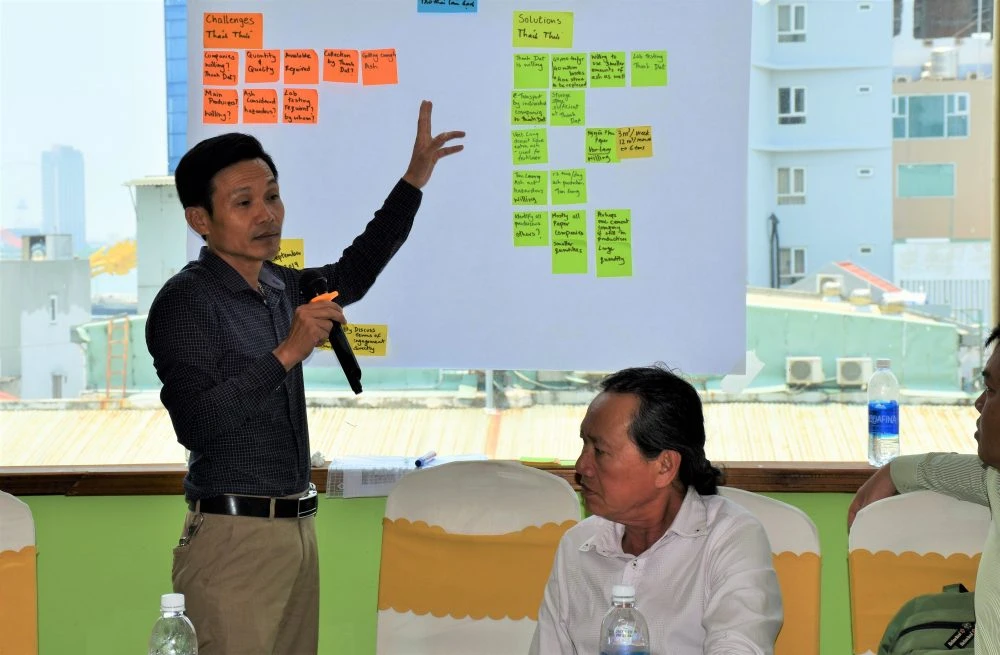
Most agreed that implementation of industrial symbiosis will bring about great economic and environmental benefits, especially the first 4 solutions mentioned above. However, there is a lot of barriers to be overcome. Especially the approved EIA should be reapproved when a company wants to change the way they treat their waste such as reusing waste/ treated waste water or receiving waste/treated waste water from other company.
Luc Jaquet, the international consultant from Sofies of Switzerland shared the participants international successful models of industrial symbiosis in Denmark, South Korea and Japan. He also highlighted the challenges and barriers these models faced during their implementation. One of the big challenges was to find companies who were ready to financially invest in buying and applying innovative technologies. Other barriers included legislation supports; business confidentiality and competitiveness; and the lack of company’s strategic vision and willingness to collaborate.
Among the barriers, companies in Vietnam in general and in Danang in particular will face, are financial availability to invest in innovative technologies and to train human resources; and the collaboration mechanism among companies involving in implementing industrial symbiosis. The most significant challenges are barriers of regulations governing the reuse of waste and treated waste water.
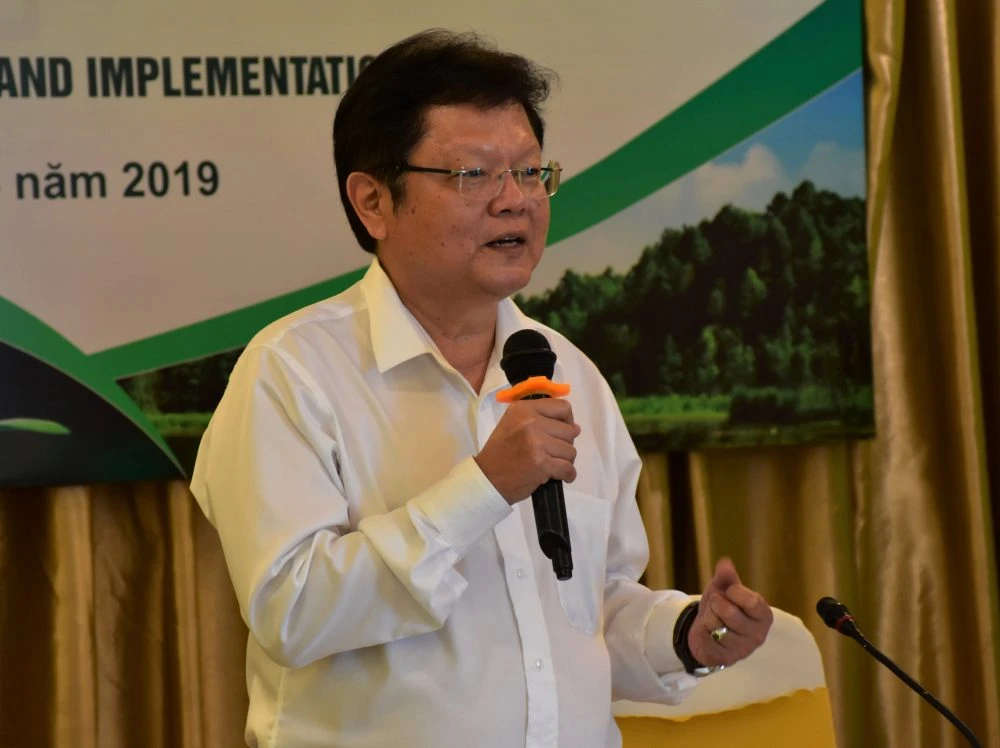
Deputy Head of the Management Board of Danang Hi-tech zones and Industrial zones Le Hoang Duc confirmed that Danang municipal authorities supports industrial symbiosis because of its benefits to not only the companies themselves but also the environment in the industrial zones and the city.
The workshop was another activity under the framework of the Project “Implementation of the EIP Initiative for sustainable industrial zones in Vietnam”, a joint project of the Ministry of Planning and Investment and UNIDO which is funded by SECO and GEF.